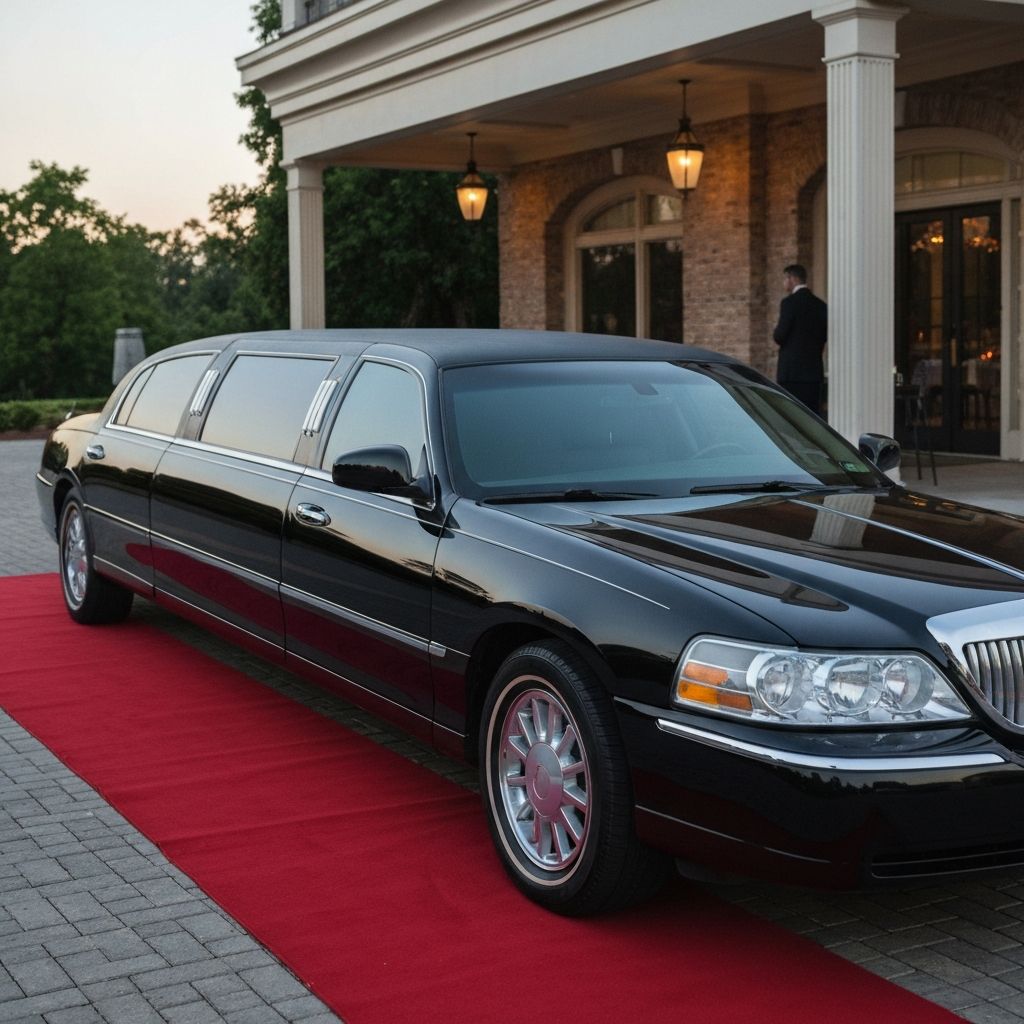
The short answer: plan pickup and return before booking
To coordinate group transportation for a Toronto sports event, confirm the venue, the intended entrance or loading zone, passenger count, equipment, desired arrival time and return plan before requesting a reservation. A vehicle that works for the drive may still be inconvenient if the group has no precise meeting point or no plan for leaving after the final whistle.
At Toronto A1 Limo, we help groups plan sports-event transportation with luxury SUVs, Mercedes Sprinter vehicles, stretch limousines and party buses. We confirm vehicle assignment, practical passenger fit, route timing, price and availability for the specific date and itinerary before a booking is finalized.
- Choose one organizer as the transportation contact.
- Give every passenger one written pickup location and one backup location.
- Decide how the group will return before the event begins.
| Planning item | What to confirm |
|---|---|
| Venue | Arena, stadium, field, event entrance and approved passenger area. |
| Passengers | Adults, children, accessibility considerations and possible late arrivals. |
| Belongings | Sports bags, golf clubs, coolers, luggage and other bulky items. |
1. Confirm venue access rules and select a usable meeting point
Sports venues can separate passenger drop-off, taxi access, parking, transit stops and pedestrian entrances. The most visible entrance is not always the best place for a chauffeured vehicle. Before setting an itinerary, review the venue's event-day instructions and ask whether there are designated loading areas, temporary road changes, security restrictions or curbside limits.
The City of Toronto advises people who need to drive to use its Road Restrictions Map and allow extra time. Its congestion-management work also coordinates planning around major events, construction and transit disruptions. That makes a venue-side plan more reliable than a generic instruction such as meeting near the stadium.
- Use a named entrance, hotel lobby or full street address rather than a broad landmark.
- Confirm whether the vehicle may wait at the location or whether the group must be ready at the curb.
- Do not plan a pickup in a crosswalk, intersection, bus stop or restricted curb area.
| Meeting-point quality | Example |
|---|---|
| Strong | Hotel lobby at 5:15 p.m., with the organizer leading the group to the vehicle. |
| Acceptable | Venue-designated passenger loading area, subject to event-day access. |
| Weak | Near the stadium, with no gate, street side or pickup time. |
2. Build timing around when the group must be inside
Plan backwards from the time the group needs to be inside the venue, not from the published start time alone. Include passenger loading, travel, traffic, walking from the drop-off area, security screening and ticket entry. For many groups, a few extra minutes before departure prevent a much larger delay at the venue.
Use this planning formula: target pickup time equals desired inside-venue time minus entry and walking time minus traffic buffer minus loading time. It is a scheduling tool, not a guarantee of travel time. Road restrictions, weather, construction and event traffic can change conditions, so the organizer should check the City of Toronto road-restrictions information again on event day.
- Set an inside-venue target, such as being seated 30 minutes before the event.
- Add a loading buffer for children, older adults or groups carrying equipment.
- Ask passengers to arrive early enough that the vehicle can depart on time.
| Calculation | Example |
|---|---|
| Desired inside time | 7:00 p.m. |
| Entry and walking time | 25 minutes. |
| Traffic buffer | 35 minutes. |
3. Choose the vehicle by people, belongings and itinerary
Passenger count is only the starting point for selecting a vehicle. Six passengers carrying small bags may have very different needs from six passengers carrying hockey equipment, golf clubs, overnight luggage or celebration supplies. The group should also decide whether everyone needs to travel together for both outbound and return trips.
We recommend discussing practical seating and cargo needs before confirming a vehicle. Our fleet includes SUV, Mercedes Sprinter, stretch limousine and party-bus categories, but the appropriate option depends on the confirmed passenger count, belongings, stops and venue access. A vehicle category does not guarantee that a particular configuration will be available on every date.
- Discuss an SUV for a smaller group with limited belongings.
- Ask whether a Sprinter vehicle fits larger groups and their equipment.
- For a celebration-focused outing, confirm both passenger capacity and practical luggage space.
| Group profile | Vehicle discussion |
|---|---|
| Two to five passengers with light belongings | Discuss whether an SUV is practical. |
| A larger group travelling together | Ask whether a Sprinter vehicle fits passengers and equipment. |
| A fan group planning a celebration | Discuss stretch limousine or party-bus options and event access. |
4. Treat the return trip as a separate transportation decision
Post-event pickup is often more difficult than the trip to the venue. Many spectators leave at once, traffic patterns may change and staff may direct vehicles away from the closest entrance. A clear return plan should identify the regrouping point, the intended pickup time and the process if the event runs late.
A fixed pickup can work for an event with a predictable finish. For playoffs, overtime possibilities, double-headers or a dinner after the game, ask whether a flexible pickup, waiting arrangement or multi-stop itinerary is suitable. Do not assume a vehicle can remain curbside during the event; waiting and access depend on the confirmed itinerary and venue rules.
- Use a post-event location that is easy to describe in one text message.
- Select a backup meeting point outside the immediate venue zone.
- Have the organizer confirm all passengers are present before departure.
| Event type | Return approach |
|---|---|
| Game with a predictable finish | Pre-arranged pickup time and location. |
| Playoff or overtime possibility | Discuss flexibility and how additional waiting time is handled. |
| Dinner or several stops after the event | Arrange a multi-stop itinerary in advance. |
5. Give passengers one simple communication plan
A group transfer runs more smoothly when passengers do not contact the chauffeur individually. Send one message with the date, pickup time, exact location, organizer's mobile number, venue plan and return instructions. Include a landmark or screenshot when a large venue has multiple entrances.
Ontario's driver guidance says motorists must follow stopping and parking signs and must not block sidewalks, crosswalks or road entrances. It also directs drivers not to stop where they interfere with traffic. For the group, the practical result is simple: be ready at the agreed location and let the chauffeur handle safe positioning and route decisions.
- Name one organizer as the main contact.
- Share a clear instruction for late passengers.
- Keep phones available for organizer updates without distracting the chauffeur.
| Message field | Example |
|---|---|
| Pickup | Hotel lobby, 5:15 p.m. |
| Venue plan | Enter together through the agreed venue entrance. |
| Return | Meet the organizer at the designated pickup area 20 minutes after the event ends. |
A practical booking checklist
Use this checklist when requesting a quote or reservation for sports transportation in Toronto. Providing these details early helps us recommend an appropriate vehicle category and build an itinerary around the venue rather than relying on last-minute changes.
For groups also using public transit as part of the day, check TTC service alerts before leaving. The TTC publishes current service information and short-term disruption alerts, which can affect passengers joining the group from different parts of Toronto or the GTA.
- Event date, venue, expected start time and expected finish time.
- Exact pickup address, intended venue entrance and preferred arrival time.
- Passenger count, mobility considerations and equipment or luggage details.
- Return pickup location and whether the pickup time is fixed or flexible.
| Question to ask | Why it matters |
|---|---|
| Where may the vehicle legally load and unload? | The closest entrance may not be an approved stopping point. |
| What vehicle category is proposed? | It should suit passengers, belongings and the itinerary. |
| Is the return fixed, flexible or waiting? | The event may end later than expected. |
For sports-event transportation planning in Toronto and the GTA, explore Toronto sports-event transportation, compare vehicle options or request a reservation with Toronto A1 Limo. For a multi-stop itinerary or venue-specific pickup question, call 647-386-3868 or contact us.